http-equiv='X-UA-Compatible'/> Your Old 45s: review
Showing posts with label review. Show all posts

Thursday, March 8, 2012

Review — Titus Andronicus at Strange Matter in Richmond, 3/6/12


A couple of blocks away from Virginia Commonwealth University's Monroe Campus, there's a black-and-red clad dive on the top of West Grace Street. Inside, you'll find fan art of Super Mario at "The Last Supper." Pabst Blue Ribbon is less than $2, and a swarm of students are ready to acknowledge that they'll always be losers.


Or, at least they'll acknowledge this the next day. But Tuesday night, Titus Andronicus was on stage, and 300 people were shouting, "You'll always be a loser!" at the top of their lungs. It's not a death sentence; rather, it's a challenge to rise to the occasion.


So goes the barroom chorus to "No Future, Part Three," Titus Andronicus' opening song to Tuesday night's performance in downtown Richmond. It's an apt town for the band; the band's 2010 release "The Monitor" was a concept album comparing a bad breakup to the Civil War.


Here's the rub: Titus' fans are losers. They're not — as a whole — dislikable, rude, ignorant, stupid, annoying or dumb. They are, however, alienated. But, as many punk acts go, that culminating sense of failure is developed into loudly-shouted anthems, Titus Andronicus' definitive forté.


As warmed up as the crowd could get with openers Screaming Females and Diarrhea Planet, there was nothing that could compare to the heat of the bar's dwarfed but crowded pit. 


Familiar songs were embedded in a mostly new set, complete with "Upon Viewing Oregon’s Landscape with the Flood of Detritus (Andronicus)," a tour-de-force worthy of a fist-pumping "Oi, oi, oi!" and — more importantly — the crowd's stamp of approval. The ratio of new songs to old may have been alienating for some listeners, but many would still consider them headbang-worthy.


Launching into a cover of "The Night They Drove Old Dixie Down" is a rarity — the first of any Titus Andronicus show, Stickles tells us — but well-received. In the distance, one hears the glasses smash and rebel yells are punctuated through the air.


So there were parts of Titus Andronicus' visit that felt unfamiliar. But it's the South, and we're known for our hospitality. We know that "the enemy is everywhere," but nobody seems to be worried or cared. 


And by the time everyone is screaming, "Baby, we were born to die!" from "A More Perfect Union," who doesn't feel like a loser? And, as any fan knows, that's OK.

Wednesday, July 20, 2011

Review — Spotify's Many Songs Overshadow Few Kinks

Legal and glorious.
A few days ago, I said Spotify, a new music streaming service that allows you to build your own playlists, would end piracy. Well, I received my invitation to join Spotify yesterday, and it's pretty darn close.

The fun starts after registration and uploading local tracks (we'll get to that later.) With more than 15 million songs, I was able to search for "JEFF the Brotherhood" (band), and find "We Are the Champions" (album) and listen to it the entire way through.

Example: I have NO Lady Gaga on my iTunes, or in my computer. At all. If I were to (hypothetically) want to listen to "Born This Way," I could. For free. Legally. Is anybody listening to this?

Another plus is the ability to download the Spotify software to iPhone or Android smartphones. While connected to the Internet, Spotify can stream any song from its library to your phone. If you have enough storage space, Spotify also lets you save local songs to your smartphone.

This sounds too good to be true. The short answer is: yes and no. It is a fantastic application to download to your phone, and can even put new songs in a "reminder" space for you to listen to when you get back to your computer. The bad news is that you can only stream Spotify's music if you have a Premium subscription, costing $9.99 a month.

There are a few new songs you will not be able to hear while they're still selling buckets of cash on iTunes, or because the artist simply doesn't want to test their new material in this market. American labels have signed onto Spotify reluctantly, testing many — but not all — of their catalogues. So while you may have Mission of Burma's "Vs." or Lady Gaga's "Born This Way," you won't get Pearl Jam's deluxe edition of "Ten." But, as stated before, this is a very small price to pay for the multitude of tracks that are available.

Then there are the ads on the free version. Although you can listen to this music (relatively) non-stop, sooner or later, an ad for Spotify or some new record will jump into the playlist, momentarily breaking your train of tunes. Again, a small price to pay when the ads are the reason you can use this program.

Although the Facebook feature still doesn't make sense, nor is it explained properly, Spotify for your desktop offers what other services have not: A choice.

REVIEW:
(+) Huge catalogue
(+) Listen to entire albums or single songs at your own discretion
(+) Better, simpler, more comprehensive than any other streaming service.
(/) Mobile streaming could be fantastic — if you have a premium subscription
(-) Pesky advertising
(-) Only 20 hours a month? Harsh.


Final Verdict: 8/10

Sunday, April 17, 2011

Review | 'Nine Types of Light' | TV On The Radio

Brooklyn group provides the soul in their most intimate release yet.


8/10
[Interscope, 4AD]


It's difficult to use the phrase "in a nutshell" when referring to Brooklyn-based TV On The Radio. The quintet's alternative funk ambience defies the very words used to describe them. Guitarists Kyp Malone and David Sitek have been too difficult to pigeonhole, throwing listeners for a loop on every record.

With 2004's Desperate Youth, Bloodthirsty Babes, they were known as an artsy indie band. Two years later they were stark and anthemic on Return to Cookie Mountain. But 2008's Dear Science was a break from the more introspective, bringing hard-hitting soul to the mix.

And three years later, TVOTR is looking to improve on Nine Types of Light, with a tried-and-true formula that we saw so fluently executed on Dear Science.

The bombastic audacity of Dear Science is not as truly evident on this record. Rather, the soulful music is used on the opposite spectrum of rock, casting an intimate mood in the lyrics. Singer Tunde Adebimpe plays his role dynamically, as evidenced in the first track, "Second Song."

An earnest Adebimpe sings to open the record, “Confidence and ignorance approved me, define my day today / I've tried so hard to shut it down like an oath, gently walk away. The track rolls along, hitting brief, accidental choruses that give the impression that we're in a gospel revival, and Adebimpe is our get-down minister.

Risking irreverence, it is also fair to say this is TVOTR's sexiest record. Highlights, such as the ostinato roll on "You," or the intimate single "Will Do," provide sensual slow jams with enough heart to avoid cliché.

One can live without the future single “Keep Your Heart,” which lulls on for a seemingly endless period of time. The chorus, "I'm gonna keep your heart," sounds more possessive than loving.

But the record is certainly catchy; even the beautiful acoustic “Killer Crane” provides a well-needed break from the dance-heavy front side. But the one thing TVOTR fans will need to overcome to enjoy the record is its lack of versatility. The eighth track, “Repetition,” is witty, but constantly regurgitating, “My repetition, my repetition is this.”

It’s cute, it’s catchy; it’s also a re-hash of umpteen other moments on the album. Yes, it certainly provides the perfect lyrical significance that we haven’t heard executed since the Red Hot Chili Peppers’ “Give it Away.”

But still, with something as consistently ever-changing as TVOTR, the rhythm section is at its finest. Drummer Jaleel Bunton’s beats hit with in-your-face fervor, and bassist Gerard Smith’s lines are as loud as ever, albeit less accented and a little more difficult to decipher.

That being said, most listeners will appreciate the new music, especially the long-awaited riffs that are inherently fun. And there’s certainly nothing wrong with throwing a few foxy crunches our way, is there?

Sunday, March 13, 2011

Dance Gavin Dance embattled on 'Downtown Battle Mountain II'

8.2/10
[Rise Records, 2011]

A couple of weeks ago, Dance Gavin Dance scream vocalist Jon Mess described their new release as “a chaotic mess,” a narrative that closely reflected the band’s emotional state. The day of this week’s release, Downtown Battle Mountain II, clean vocalist Johnny Craig finished rehab for multiple addictions. Craig, who returned recently after being forced out of Dance Gavin Dance following the original Downtown Battle Mountain, canceled all his shows save DGD and his other band Emarosa, an outfit with buckets of buzz at the apex of MySpace’s musical exposure.

With his close ties to social media, it should come as no surprise that Craig would front a band with the musical mentality of a seventh grader that knows how to play just about every harmonic riff and lick in the book.

And here we are again. Back with Dance Gavin Dance’s original lineup (minus guitarist Sean O’Sullivan), for a continuation of their first LP.

The assumptions are true: The sounds are quirky, soulful, apocalyptic, scattered, melodic and dissonant all at the same time (to name only a handful of adjectives.) The record is confusing, no getting around that. But DGD’s juxtaposition of funky-punky instrumentation, high-range vocals and aggressive screams is what makes this band one of the most remarkable in today’s screamo scene. The sequel to Downtown Battle Mountain is a mess; in the same way Jackson Pollock’s dripping phase is a mess.

Meandering guitar riffs from brainchild Will Swan bounce from opposite speakers like a game of Pong. This is hardly a negative consequence, though: Swan’s virtuosity is a tight rambling of high frequencies and melodic up-tempo punches that spin your brain upside down at a rate of umpteen times per second.

Though it’s in line with every other DGD album to date, including the self-titled release and Happiness with interim lead singer Kurt Travis, DBMII makes a newly syncopated impression on old fans. Songs like “Blue Dream” and “Privilously Poncheezied” showcase Craig’s popular influences, making a strong case that his voice rivals the King of Pop’s on the second side of Thriller.

The eccentric songwriting brings immense humor to an emo scene desperately in need of some honesty. “Thug City” bluntly reminds us the main reason many musicians get into the business: getting laid. “Pounce Bounce” has Mess musing, “What’s it like to be an atheist? / Are you okay with suicide?” It can be pretty grim, but only if you’re not thinking of all the scenesters he’s fucking with.

Craig’s overt chauvinism is tired though, and eyes will roll with his shouts of “What color are your fucking eyes?” and “Dance Gavin Dance, baby!” that appear as the played-out form of a mixtape distributed on a Brooklyn sidewalk.

The only problem is that we’ve been hearing DGD shout about one-night stands and relationship problems since 2006’s Everything I Say is Royal Ocean.

But unorthodox compositions for the sole purpose of providing rhythm give way to frustration. There has to be enough people that might like to know why Mess is completely indecipherable on about 80 percent of the album, even when his rhythmic howling on “Need Money” is simply addictive. By the time “Swan Soup” — track 10 of 11 — hits your ears, some listeners might be ready to retreat from the battle.

To enjoy DBMII, you have to endure a few listen-throughs. But after noticing the seamless transitions on tracks, the twisting nonsense of DGD starts to hold some clarity. Some fans are probably going to be disappointed and frustrated with the band’s revamped sound and relatively carbon copy lyricism. But what frustrates others will excite people that are ready to see Dance Gavin Dance running in place: ever-changing, yet always the same.

Sunday, March 6, 2011

Dropkick Murphys not yet ready to go 'Out in Style'

[7.7/10]
Born & Bred Records, 2011


The story has repeated itself several times in the last half century: A punk band puts out a few hits in their heyday and, in the midst of trying to get their swing back while changing hands over the past three decades, they keep playing those same hits that got them famous in the first place. And while Dropkick Murphys have always got new stuff to play for a hungry Irish audience, relatively new fans and skeptics might think the band is teetering on the brink of redundancy.

Let’s back up for a second, because this needs clarity. Taken individually, every one of DKM’s records is anthemic, a gusty combat boot to the face. After getting some considerable airplay with “The Gauntlet” off 2001’s Sing Loud, Sing Proud!, the Boston misfits became a punk staple with Blackout. Soon followed by The Warrior’s Code, unduely famous for only the raucous “I’m Shipping Up to Boston,” they released The Meanest of Times in 2007. It was their most ambitious album to date, breaking the mold that punk couldn’t use mandolins and banjos to rouse a crowd.

But here we are, four years later, and listening to their attempt at a concept album, Going Out in Style. DKM are still trying to break the mold, determined and hungry to be taken seriously, but are easily pigeonholed in their position as a good Irish punk band.

Again, it’s not to say the songs themselves aren’t good. “Hang ‘Em High” is a valiant overture full of wartime bravado, and the eponymous track is probably going to be playing in every northeastern pub by Major League Baseball’s opening day.

There’s also a tradeoff in listenability. Crunchier songs have more insightful, wise lyrics than ever before, including the single “Memorial Day.” Bassist Ken Casey and lead vocalist Al Barr wax poetic when channeling the concept’s narrator, immigrant Cornelius Larkin. “I was young and I wouldn’t hear it, you had opinions I had mine too / Just a kid with all the answers, pompous pride and not one clue,” shows that the Murphys have gained a sense of life’s teachings through all those skinhead years two decades ago. And the coupling of “Deeds Not Words” and the stripped-down jigfest “Take ‘Em Down” are uncanny protest folk songs worthy of the legendary name Woody Guthrie.

But, as mentioned earlier, there’s a rigid dichotomy between songs with good songwriting and others that are just unlistenable. Snoozefest ballads “Cruel” and “1953” seemingly do nothing to provide context to the concept, and don’t have as much gusto as previous greats “Forever” and “Fairmount Hill.”

And it’s difficult to give the Boston bruisers any lenience on the term “concept.” Bouncing from the mid-19th Century-dated “Broken Hymns” and leaping to “Sunday Hardcore Matinee,” which references Bad Brains of all bands, it’s hard to take them seriously when they try to tell a story that hasn’t already been set up for them, regarding the massive amount of cover songs they strive to perfect.

When we take a look at the overall direction of DKM, however, it’s probably best if we pay attention to the band as their fans always have: with a sincere sense of appreciation. The band doesn't necessarily have to keep playing the same blue-collar, northern Isle tunes over again, but they do because their fans devour it, and they have fun playing it. Whether listening to a studio recording or watching the 2009 performance of Live on Lansdowne, it’s obvious that the band has an insatiable appetite for having fun.

So when you finish the record to Casey and the great Bruce Springsteen throwing their gravel-filled voices across the bar on “Peg O’ My Heart,” you’ll remember the band’s not doing this for the exposure on Fuse, or a stuffy label that wants more pop sensitivity. They just want to play the damn tune one more time. Now that’s something to which I can raise a glass of Guinness.

Selected Songs: "Take 'Em Down" | "Memorial Day"

Wednesday, December 22, 2010

2010's Top 10: Albums - Part Two

Here they are, as promised, numbers 5 through 1. Please, hold your applause until the end.


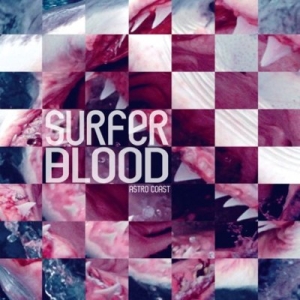
5. Astro Coast - Surfer Blood
[Kanine]
Not every track is fast, and not every track is an instant hit. But most definitely, Florida’s Surfer Blood is always catchy. “Floating Vibes” grooves easier than the waves that John Paul Pitts sings about. But the up-and-coming band’s most notable characteristic — aside from sounding like they record exclusively in absurdly large, hollow corridors — has to be their ability to just have fun. Songs like “Take It Easy” and “Neighbour Riffs” are just what you need to hear before waxing down and cruising through some heavy barrels.
TOP PICKS: "Swim" | "Slow Jabroni"


4. Year of the Black Rainbow - Coheed & Cambria
[Columbia]
First things first: Coheed and Cambria is my favorite band in the entire world — hands down, period. But even I can say that parts of 2007’s Good Apollo, I’m Burning Star IV, Volume Two: No World for Tomorrow can be just as difficult to get through as reading the album title. But the prequel to the Amory Wars saga — you see, it tells the story of ... hell, you’ll figure it out someday — improves on several things. Singer Claudio Sanchez has exponentially improved his vocal work, switching from disgruntled growls to belting out virtuosity in a matter of half-seconds. Second, the inclusion of new drummer Chris Pennie allowed the prog-punk-etc. group to branch out, performing a well-blended, seemingly impossible concoction ranging from speed metal to acoustic ballads.
TOP PICKS: "Here We Are Juggernaut" | "In the Flame of Error"


3. The Monitor - Titus Andronicus
[XL]
There are few things in this world that could have turned into a sloppy mess but turned out a masterpiece (Imagine if Orson Welles made Citizen Kane in a basement with house lamps as backlights). But Titus Andronicus’ incredibly bold concept album links the present with seven score and seven years ago. Using the Civil War as a backdrop, these New Jersey punks describe the ailments in America’s political climate. The exuberant “Titus Andronicus Forever” and “Theme from ‘Cheers’ ” are perpetual rally cries and fight-starters that would make an oi punk blush. But moreover, Titus Andronicus has been at the forefront of many bands this year that challenged the notion that punk can’t be ambitious.
TOP PICKS: "A More Perfect Union" | "A Pot in Which to Piss"


2. The Suburbs - Arcade Fire
[Merge]
Evidently, Arcade Fire didn’t deserve the 9.1 I gave them. I say I “gave” it to them, because it’s not the grade they earned.


Two parts eulogy and one part biting social commentary on treating music as a commodity, The Suburbs not only serves as a comment on the hidden traumas of suburban life, but also as a remembrance to youthful exuberance. Frontman Win Butler’s voice aches for past experiences, both real and also the ones he felt he should have had. It’s an anthem of exploration for today’s youth, as well as a call to take heed. But Butler doesn’t have all the answers to urban sprawl, and he doesn’t pretend that he does. Instead, The Suburbs is merely a mirror, allowing us to decide what we would do if we “could have it back, all the time that we wasted.” Hopefully Butler won’t think I’m wasting time if I’m listening to this.
TOP PICKS: "Ready to Start" | "Sprawl II (Mountains Beyond Mountains)"


1. My Beautiful Dark Twisted Fantasy - Kanye West
[Roc-A-Fella, Def Jam]

It’s almost impossible to think of Kanye West without his ego. The rapper hasn’t explained his self-consciousness and shortcomings since The College Dropout back in 2004. And while West still hasn’t been able to get a grip on how ridiculous his lifestyle is, he is finally criticizing himself, along with the rest of the world. In doing so, he’s created his best album. 

West’s ambition is only surpassed by his superb production, creating some of the best, most emotional beats not only in his career, but also out of all of the current rap game. Tracks flow seamlessly together, creating an artwork with layers of musical texture dripped on top of each other like a Jackson Pollock. But the music is only as powerful as its message; West’s time away from the limelight was transcendental, but also necessary for him to compile his torment into one dark, truly beautiful — and certainly twisted — fantasy.

TOP PICKS: "All of the Lights" | "Monster"


Did I miss anything? Let me know!

Tuesday, December 21, 2010

2010's Top 10: Albums - Part One

As the year comes to a close, many of us find ourselves reflecting on the best music of the year. Critics begin thinking in late November of their favorites. But besides all the lists and critical hype, what makes this time great is the sharing of our favorite music. Combining both of these, I give you my top 10 favorite albums of the year.

10. White Crosses - Against Me!
[Sire]
Being a middle-of-the-road act in a volatile genre makes a band stand out, and not always for the best. But Against Me! point a big middle finger at the aging punk masses and shout indecisive psalms at the top of their lungs on White Crosses. After 2007’s positively received New Wave, the band’s ambivalence hit a peak, and while White Crosses is more of the same, the songwriting has been more introspective and, in some parts, more witty than their previous work’s straightforwardness.
TOP PICKS: "I Was a Teenage Anarchist" | "High Pressure Low"

9. All Day - Girl Talk
[Illegal Art]
Maybe it’s fitting that Gregg Gillis’ third album begins with Black Sabbath’s “War Pigs” mashed up with Ludacris’ “Move Bitch”. On one hand, Gillis’ critics believe he’s been waging a war against the music industry with his unique style of extensive sampling. On the other hand, the Pittsburgh native may also be saying to these critics, quite literally, “Move bitch, get out the way,” as he currently dominates the party scene. And those particular bitches certainly should. All Day is a continuous master jam filled with several Easter eggs and fun for the whole family. Or, at least the part of the family that is allowed to hear stuff like “move bitch.”
TOP PICKS: described by Illegal Art as an album that should be listened to the entire way through. As a result, I suggest the entire thing.

8. Treats - Sleigh Bells
[Mom + Pop / N.E.E.T.]
However you look at the Brooklyn duo, Sleigh Bells literally brings a lot to the table. A mesmerizing practice in sheer distortion, their car speaker-bass and lo-fi guitars are only cherry picking this group’s source of power. No matter if they’re making punk, dance or just plain noise, one thing is certain: Sleigh Bells hits hard. But the grouping is not flimsy enough to be considered straight rock ‘n’ roll. Although former Poison the Well guitarist Derek E. Miller’s solos are catchy dance anthems, the sheer volume and calculation of the beats on tracks like “Run the Heart” and the absurdity of “Straight A’s” make this band’s forte its use of forte.
TOP PICKS: "Tell 'Em" | "Rill Rill"

7. Blue Sky Noise - Circa Survive
[Atlantic]
Although Atlantic visibly cut the fat out of Circa’s modern prog temperament, the move was overdue. Singer Anthony Green shines the brightest here out of his entire career, boasting a vocal aggression that attacks every song. Additionally, Green’s lyrics do justice to the emo community, shouting sing-along choruses that juxtapose zealous vigor and despondence. And if there’s anything as eclectic as Esao Andrews’ cover art, it’s rhythm guitarist Colin Frangicetto’s sleek, haunting hooks. At the least, Blue Sky Noise’s energy is a damn good argument against prog’s lengthy nature.
TOP PICKS: "Glass Arrows" | "Imaginary Enemy"

6. Halcyon Digest - Deerhunter
[4AD]
You can tell from the opening hi-hats on “Earthquake” that Deerhunter is not necessarily shattering boundaries, but they are seriously bending some rules here. This noise group finally dipped their toes in the mainstream with their fourth album, Halcyon Digest. Deerhunter’s ambient, tight jams are touchstone reflections on adolescence and isolation, relying heavily on Bradford Cox’s introspective songwriting to stir the audience’s pathos. But Halcyon Digest is also an exercise in imagination, with deep rumination required on the artist's and the listener’s part in order to truly enjoy this album.
TOP PICKS: "Sailing" | "Basement Scene"

I'll be releasing numbers 5 to 1 tomorrow night. Until then, comment and let me know what your favorites were this year!

Thursday, December 2, 2010

Kanye West - "My Beautiful Dark Twisted Fantasy"


9.3/10
(2010 / Roc-a-Fella, Def Jam)

Read my review for Kanye West's production storm, My Beautiful Dark Twisted Fantasy in this week's The Breeze. I'd paste it on here, but it's only two more seconds for you to click on the link and The Breeze will get more hits and our online editor will be a happy man. Win-win situation.

Monday, November 22, 2010

Dr. Dre's 'Kush' lights up Detox hype

9.0/10

You want to know why California's Prop. 19 didn't pass? Because Dre released this song two weeks too late.

I knew it. You did forget about Dre. It seemed like everyone I talked to hadn't remotely heard of this single, and were even more astounded that Detox might actually get released in our lifetime.

Honestly, I never thought even Dr. Dre would live to see Detox get released. Maybe the album would be released as a bunch of tracks that never got finished due to Dre's compulsive perfectionism. But we're starting to see the light at the end of the tunnel with "Kush."

Enlisting the help of DJ Khalil, Akon and, of course, Snoop Dogg, "Kush" has the appeal of old-school Dre with the production of something you'd probably have to sell your soul to build. Heart-pounding bass, pizzicato minor strings and some lone piano keys for the hook make the track a synergetic piece.

Typical stoner laughs will be emitted from lines such as "We roll shit that burns slower than fuckin' molasses," and Snoop's "Got some bubba, I give ya that, need it for my cataracts." Of course, the duo of Snoop and Dre have never been ones to shy away from their old friend Mary Jane, even if "Kush" is, as Dr. Dre said, not what his album is about at all.

But, to affirm reality, the single is something much bigger than weed. This shows that the 10-plus years Dre was sitting in his lab and pushing back Detox wasn't just for cheap hype. Rather, "Kush" is the single factor in what could be a monumental achievement for the West Coast pioneer before his retirement.

Tuesday, November 9, 2010

Coheed and Cambria - "Bull Moose Sessions" Tape

4.4/10

The question is easier said than answered: How do you take an emo-punk-etc. band's hardcore sound and soften it up for some easy listening? And while New York's Coheed and Cambria can do this very, very well (just listen to the "Junesong Provision" demo), it's increasingly difficult when the bootleg "Bull Moose Sessions" is a handful of repetition that most of the band's fans would likely roll their eyes at.

The acoustic tapes are a set the band performed at Bull Moose, an entertainment store in Scarborough, Maine. And while the exuded effort is an enjoyable one from lead singer/guitarist Claudio Sanchez and company, the result is unvaried.

Three tracks off their new release, Year of the Black Rainbow, are included, as well as an acoustic version of the crowd-pleasing "Welcome Home."

The acoustic "Here We Are Juggernaut" is a far break from the bleeding-heavy original. Heavy sustains and booming drums are replaced with whimsical piano and the incense-and-flowers-oh-girl side of Sanchez's vocals. And yet, they surprisingly fit the music's passion just as well as the brooding master track. So, a tangible copy of the spin-off is a must for anyone that considers themselves Children of the Fence.

But alas, new ground isn't exactly being broken here. The derivatives of ballads "Far" and "Pearl of the Stars" sound like soft matches to their studio-produced counterparts. Not to mention "Welcome Home" has not only been overplayed, but overproduced as an acoustic copy. One only needs to listen to the Kerrang! radio tape to make sense of this. Not to mention that the production is shoddy at best. Distortion, fades in and out in volume consistency, and too-loud audience members really make the last track a downer.

But it's not as if the band were feigning ambition. These versions were available on YouTube for about two weeks before Black Rainbow was actually released, and ultimately stirred up interest for the studio album. In the end, it seems like a live record where, in the most Bohemian of rock 'n' roll clichés, you really had to see them for yourself.

Sunday, November 7, 2010

Arcade Fire — "The Suburbs"

9.1/10
2010, Merge Records

If you thought that planned communities were just an aesthetic annoyance in your brooding, Holden Caulfield-esque adolescence, apparently you didn’t get Arcade Fire’s memo.

The suburban war’s battle lines are drawn in the Montreal band’s third studio release, aptly titled The Suburbs. Here, Win Butler with his wife Reginé Chassagne and his brother William, lead their baroque-rock ensemble of just about everyone and their grandmother across 16 tracks detailing the trials and tribulations of the repressive lifestyle in Anytown, USA.

The band’s nature is just shy of what Cirque du Soleil might call “subtle”: it’s just not in their vocabulary. The grandiose texture of Arcade Fire constitutes their grievances with society in such a boisterous manner that usually resembles a middle finger. In short, imagine a symphony parked in your garage.

It’s because of this loaded orchestration that Arcade Fire’s deepest, most sentimental release so far seems ironic. All the dirty confessions on tracks like “Half Light II (No Celebration)” are wailed at the top of their lungs. Win’s shaky voice sings with vexed authority, “Oh, this city’s changed so much, Since I was a little child / Pray to God I won’t live to see, The death of everything that’s wild.” The listener gets the feeling Butler is talking about their dirt-town he or she wanted so badly to leave. That’s because he is.

Not many songs will provide an eye-welling catharsis like “Wake Up” and “No Cars Go”. In fact, some gems like “We Used to Wait” will leave you on the tip of your coccyx, only to leave you at the… wait for it! Climax... However, “Sprawl II (Mountains Beyond Mountains)” allows the listener release their frustration in a thrilling, synth-pop finale that pits itself toe-to-toe with MGMT’s work, and wins with a hand tied behind its back.

Arcade Fire additionally uses half of the record to, putting it lightly, comment on our generation’s mistreatment of music as an art form in the digital age. Songs like the lightly seething “Rococo” and the gospel-rock anthem “Month of May” expose today’s American culture of commodities, such as acquiring ridiculous amounts of music, or taking stock in a bunch of people you think are your friends (Facebook, anyone?) It’s hard not to sing along and wave your hands like a goon when Butler commands through the query, “How you gonna lift it with your arms folded tight?”

Maybe it’s poetic injustice, but Arcade Fire’s most personal, expressive release will also be their most ignored by the crowd that became so enthralled with the same group that gave us Funeral. After the 2007 release of "Neon Bible," it suddenly became uncool for PBR-swilling hipsters to listen to the band. While Arcade Fire definitely has something important to say, the sweeping nature will probably alienate those Butler is trying to reach.

At the end of the fifth act, the album ends with Butler crooning, “If I could have it back, all the time that we wasted / I’d only waste it again,” the listener will probably get the message that they really aren’t supposed to be wasting anything as precious as this record. I can only pray that someone else is also listening.